

A Future Crunch guide to the cognitive biases running your life

Image: starling murmuration - Daniel Biber
Here's a fun fact that'll ruin your day: your brain makes approximately 35,000 decisions every 24 hours, and the vast majority of them are based on shortcuts, half-truths and evolutionary hacks that haven't been updated since you were worried about being eaten by leopards.
You think you're rational. You're not. You think you're objective. You're definitely not. You think you're making careful, evidence-based decisions about your career, relationships, investments and what to have for lunch.
What's actually happening? Your brain is running pattern-matching algorithms designed 200,000 years ago, applying them to problems that didn't exist until last Tuesday, and presenting the results to you as "intuition" or "gut feel" or "common sense."
Welcome to the maze of your mind. It's a beautiful disaster in there.
THE BRAIN THAT SAVED YOUR ANCESTORS (AND IS QUIETLY SABOTAGING YOU)
Your brain is an absolute marvel. The most sophisticated thing in the known universe, capable of composing symphonies, splitting atoms and arguing about pineapple on pizza. It's also deeply, hilariously bad at certain things.
Not because you're not smart. Because evolution optimised for survival, not truth.
Your ancestors didn't need accurate beliefs about reality. They needed fast decisions that kept them alive long enough to reproduce. See movement in the grass? Assume predator, run. Was it just wind? Who cares, you're alive. The ancestor who paused to carefully evaluate the statistical probability of leopard versus atmospheric disturbance? Eaten.
So your brain developed shortcuts. Lots of them. These shortcuts (cognitive biases in the scientific literature) are features, not bugs. They kept your great-great-times-ten-thousand-grandmother alive on the savanna.
The problem is you're not on the savanna anymore. You're navigating climate policy, AI integration, investment decisions and whether to believe that thing you read on social media. And your brain is still running leopard-avoidance logic.
THE GREATEST HITS OF YOUR BRAIN (LYING TO YOU)
Let's look at some of the classics, shall we?
Confirmation Bias: Your brain's personal yes-man. Whatever you already believe, it finds supporting evidence and quietly discards everything else. Conspiracy theorists use this. So do you when you're shopping for a new car and suddenly notice that exact model everywhere, which obviously means the universe wants you to buy it.
Think you're immune? Here's a test: Can you name three pieces of strong evidence that contradict one of your most deeply held beliefs? If you can't, confirmation bias is driving.
Availability Heuristic: Your brain assumes that whatever comes to mind easily must be important or common. This is why people think plane crashes are more dangerous than car accidents (they're not, you're 100 times more likely to die driving) and why everyone thinks crime is rising (it's not, in most developed countries it's been falling for decades).
The media algorithms know this, by the way. That's why they keep showing you outrage and catastrophe. Not because that's what's happening most. Because that's what's memorable. Steady progress is not.
Dunning-Kruger Effect: The beautiful irony where people who know the least are the most confident, and experts are plagued with doubt. You've seen this in every meeting where the person who just discovered a topic last week is absolutely certain about the solution, while the person who's studied it for 20 years is hedging with caveats.
Plot twist: you're probably experiencing this right now about something. We all are. The question is whether we know it.
Sunk Cost Fallacy: This keeps you trapped in decisions your past self made. You've invested time, money or energy into something that isn't working, so you keep investing more because "we've come too far to stop now." This is how bad relationships last ten years, failed strategies persist for quarters and governments throw good money after bad.
Your brain can't accept that the past investment is gone regardless of what you do next. So it sacrifices your future to honour your past.
Recency Bias: Whatever happened most recently feels most important. This is why one bad quarter makes executives panic and restructure, why one impressive demo makes investors throw millions at ‘vaporware’, and why the last thing someone said in a meeting carries disproportionate weight.
The market crashed last week? Suddenly everyone's a bear. It rallied today? Bulls everywhere. Same fundamentals. Different recency.
These are just the greatest hits. The Cognitive Bias Codex documents 188 distinct cognitive biases across four categories: too much information, not enough meaning, not enough time, and what to remember. The full catalogue is overwhelming.

But the principle is consistent across all of them: shortcuts that helped your ancestors survive are quietly undermining decisions you need to get right.
THE REAL COST OF CHEAP THINKING
Here's why this matters beyond being interesting dinner party conversation.
These biases are actively costing you money, opportunities and strategic capacity.
Leaders make hiring decisions based on who reminds them of their younger self. Teams ignore warning signs because they're too invested to pivot. Organisations miss massive opportunities because the data doesn't match what they already believe. Investors chase whatever just spiked, or whoever sounds most certain (which, thanks to Dunning-Kruger, is rarely the most qualified person in the room).
McKinsey research on major corporate decisions has consistently found that cognitive bias is one of the primary drivers of value destruction in organisational strategy. This isn't a rounding error. It's the difference between thriving and surviving.
The worst part? You can't simply "try harder" to fix this. The biases operate below conscious awareness. By the time you're aware of a decision, the bias has already done its work.
You can't out-think your brain's architecture. But you can build better scaffolding around it.
NAVIGATING THE MAZE (NOT ESCAPING IT)
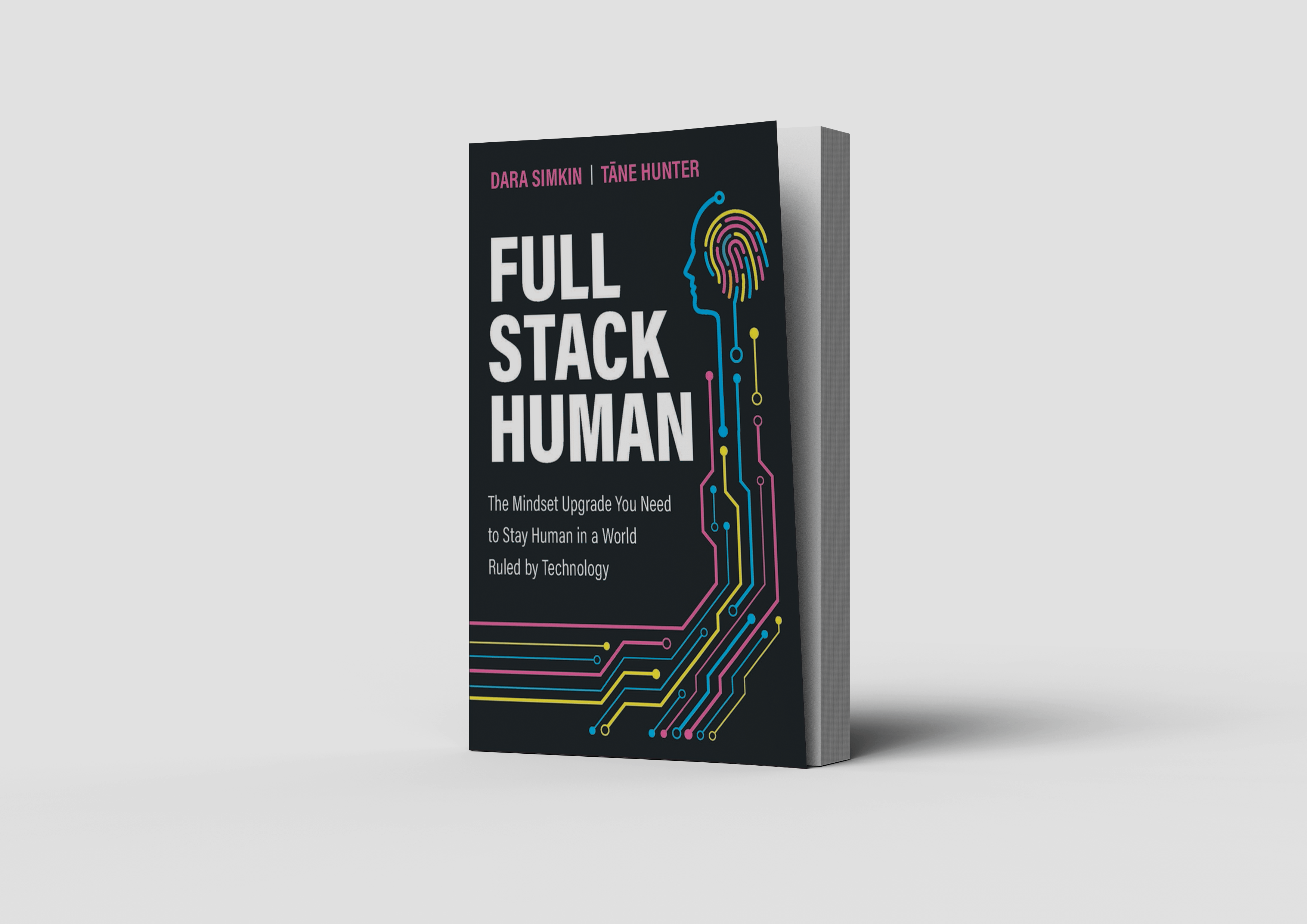
This is where the "Navigating the Maze of Your Mind" chapter in Full Stack Human comes in.
Because here's the thing: you're never going to eliminate cognitive biases. They're baked into your neurology. Trying to remove them would be like trying to remove your immune system because it sometimes overreacts.
But you can navigate the maze more skillfully.
The chapter breaks down the specific biases that kill good decision-making, shows you how to recognize when they're operating (before you've made the costly mistake), and gives you practical protocols for building bias-aware thinking into your systems.
Not "be more rational" advice. Actual tools. Like how to structure decisions so confirmation bias can't dominate. How to build team processes that expose Dunning-Kruger before it derails projects. How to design your information environment to counter availability heuristic rather than amplify it.
The difference between knowing you have biases (which everyone does after one pop psychology article) and actually navigating them skillfully (which almost nobody does) is the difference between intellectual awareness and operational capacity.
One makes you more interesting at dinner parties. The other makes you better at your job, your relationships and your decisions about things that actually matter.
THE BRAIN YOU HAVE
Look, your brain is never going to be a perfectly rational calculating machine. Evolution didn't optimise for that, and cognitive biases aren't going away.
But you can learn to work with your brain's quirks instead of being sabotaged by them.
You can build decision-making systems that account for how human cognition actually works, not how we wish it worked.
This is what the Full Stack Human framework is built on. Not transcending your neurology. Working with it skillfully.
The "Navigating the Maze of Your Mind" chapter gives you the map. Not to escape the maze (you can't). To navigate it without walking into the same walls everyone else keeps hitting.
Because in 2026, the competitive advantage isn't having a better brain. It's knowing how your brain actually works and building systems that make the most of it.
FULL STACK HUMAN IS NOW AVAILABLE
Chapter 1: "Navigating the Maze of Your Mind" - for everyone who's tired of their brain sabotaging their best intentions.
Get your copy at www.fullstackhumanbook.com.
Stay human. The world needs it.
— Tāne Hunter
Founder, Future Crunch
Co-author, Full Stack Human
P.S. If you just read this entire newsletter thinking "yes, other people definitely have these biases," congratulations. You just experienced confirmation bias in real-time. We all did. That's the point.
P.P.S. Forward this to someone who needs to know their brain is lying to them. Or don't, because that would trigger their defensive bias and make them less likely to actually read it. See? The maze goes deep.
